


East Africa: The New Frontier of Cybercrime

Over the past two decades, internet access across African nations has grown at an average of 17% per year more than double the global average. Mobile money, digital banking, e-government, and cloud adoption have transformed economies across Kenya, Tanzania, Uganda, Rwanda, and Ethiopia. But this digital revolution came with a dark shadow: cybercriminals have been watching.
According to INTERPOL’s 2025 Africa Cyberthreat Assessment, cybercrimes now account for more than 30% of all reported crimes across East and West Africa. Criminal syndicates are treating the region as both a target market and a testing ground for emerging attack methods what works here gets exported globally.
“Cyber criminals are increasingly using Africa as a testing ground for new types of ransomware and other cyber-dependent attacks.” – Global Initiative Against Transnational Organized Crime (GI-TOC), 2025

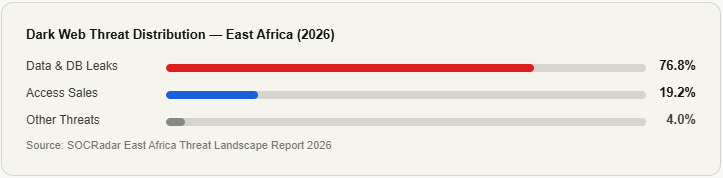
The Threats You Should Lose Sleep Over.
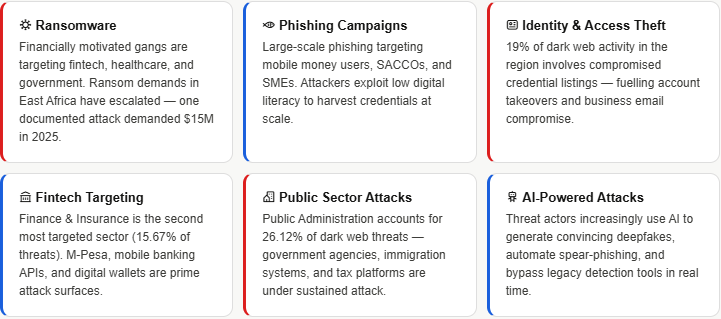
Not all attacks are created equal. Here’s what’s gaining ground across East Africa’s threat landscape right now:

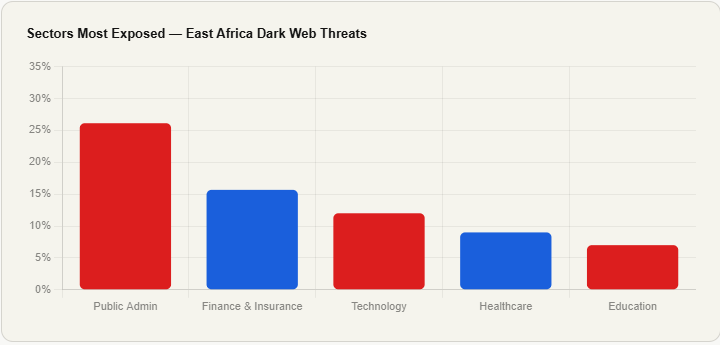
Kenya: The Most Targeted Nation in the Region.
Kenya stands at the epicenter of East Africa’s cyber risk. With the continent’s most advanced digital financial ecosystem, the highest internet penetration in the sub-region, and rapid cloud adoption by both government and private sector, Kenya presents an irresistible target surface.
Kenya alone accounts for 31.43% of all dark web threats logged for East Africa more than any other single country. The Nairobi-based fintech corridor, government digital transformation (eCitizen, KRA, NHIF systems), and the SME sector are the most exposed categories.
Kenya’s cybersecurity market is projected to grow significantly but the gap between threat volume and organizational readiness remains dangerously wide heading into 2026.

Why Attackers Are Winning (For Now)
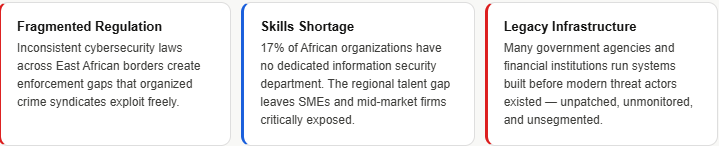
The threat escalation isn’t a mystery. It’s the predictable consequence of rapid digital growth outpacing security investment. Criminal actors exploit four structural vulnerabilities:
Resilience Is Built, Not Bought
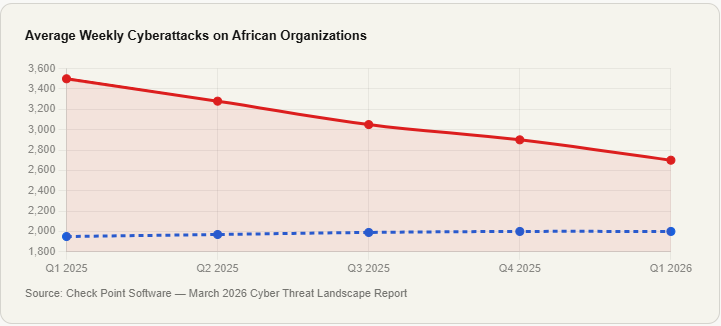
The good news: African organizations are improving. Check Point’s 2026 data show a 22% reduction in weekly attack volume year-on-year a sign that investment in cybersecurity maturity is beginning to pay dividends. But the intensity still far exceeds the global average, and complacency is not an option.
Leading organizations in 2026 are prioritizing AI governance, identity security, automated threat detection, board-level cyber oversight, and critically human capacity building. The organizations that thrive aren’t necessarily those with the biggest budgets. They’re the ones whose people know what to do when it counts.
In 2026, resilience will depend on how well organizations govern AI, secure identities, modernize detection, and above all elevate human cybersecurity awareness. Machines can alert. Only trained people can respond.


 Chat with Us