

Why incident readiness, detection, and response can no longer be an afterthought for Insurance, Healthcare, and Government institutions in Kenya.
In November 2025, Kenyans woke up to a national digital disruption. Dozens of government websites: from State House to the Ministry of Health, Education, Interior, and the Directorate of Criminal Investigations were either offline or defaced by attackers within a matter of hours. Weeks before that, the Kenya Revenue Authority’s own official social media account was hijacked and used to push fraudulent messages to the public.
These aren’t stories from far-off countries. They happened here, to institutions many of us interact with every day. And they raise a question every organization, especially those handling sensitive personal, financial, or medical data needs to answer honestly: if an incident hit us today, would we detect it in time, and would we know exactly what to do?
The Growing Threat Landscape in Kenya.
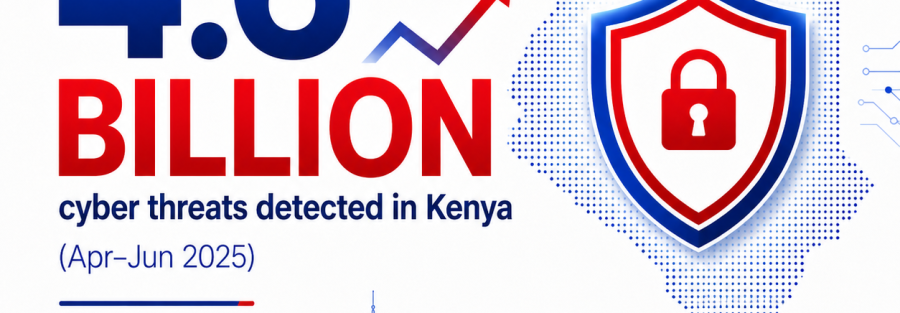
Kenya’s cyber threat environment has escalated sharply. According to the Communications Authority of Kenya, cyber threat detections jumped to 4.6 billion events between April and June 2025 alone, with Distributed Denial-of-Service (DDoS) attacks surging by over 255% in a single quarter. Malware, web application attacks, and system vulnerability exploits all posted double- and triple-digit growth in the same period.
This isn’t a distant risk. It’s an active, escalating pattern and Insurance, Healthcare, and Government institutions sit squarely in the crosshairs because of the sensitive data they hold.
Sector Spotlight: Real Incidents, Real Lessons.
🏛️ Government
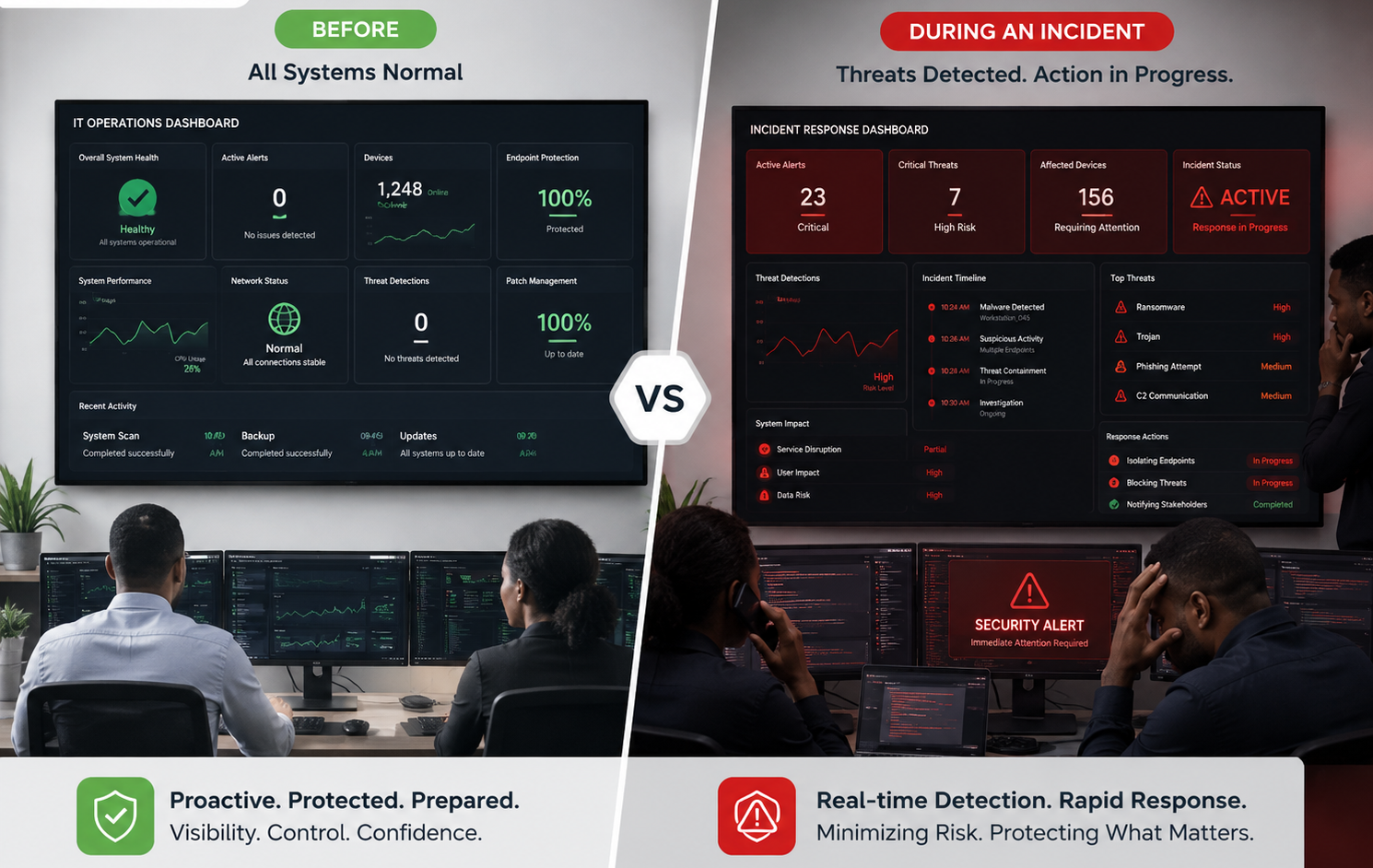
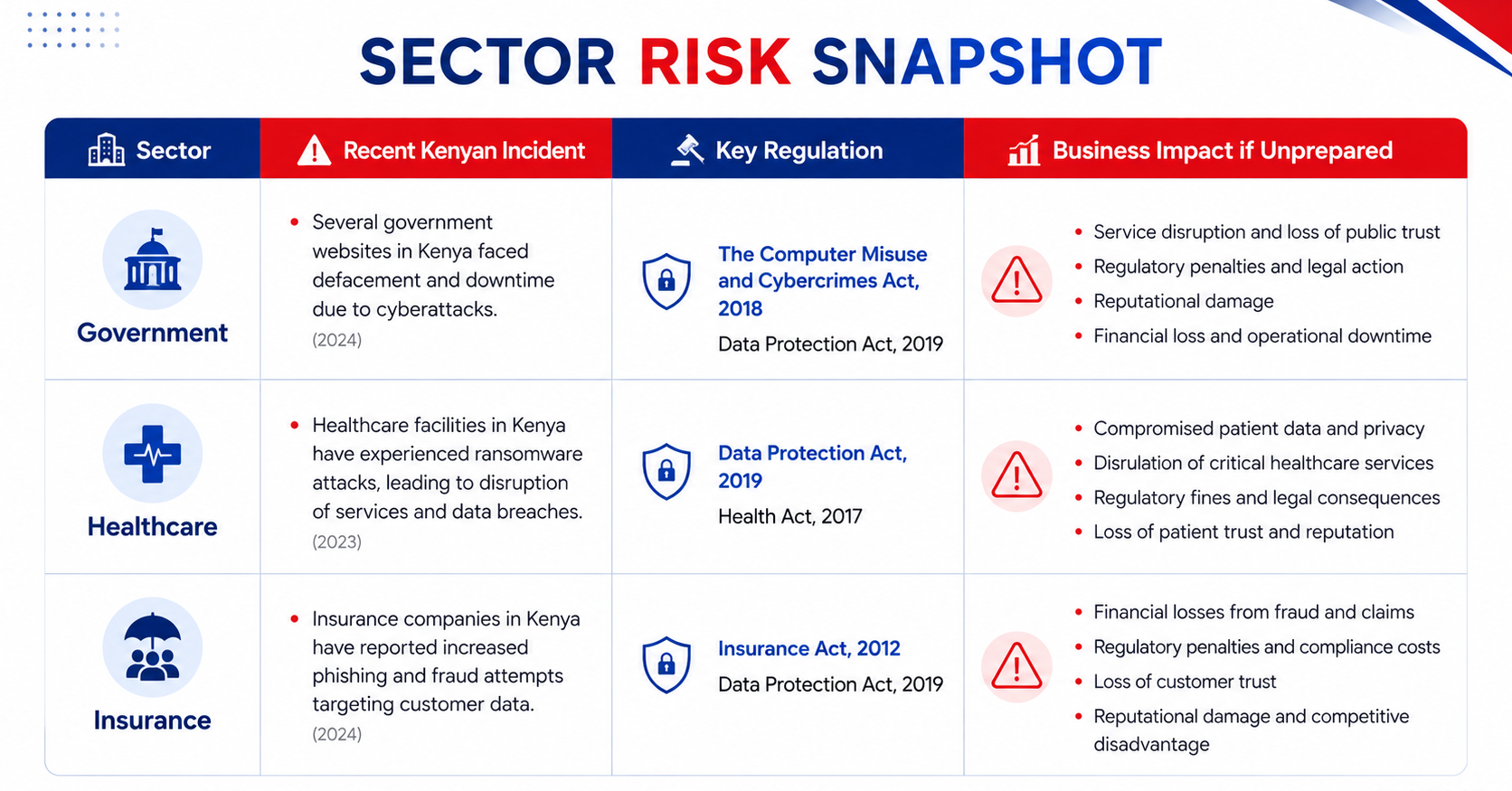
- The November 2025 attack on Kenyan government platforms is a textbook case of what happens when detection and response aren’t fast enough. Attackers defaced pages, disrupted services like the Hustler Fund and Immigration Department, and the incident forced the activation of the National KE-CIRT/CC and NC4 for containment. Officials confirmed the response process, but the disruption to citizen services had already happened by the time systems were restored.
- Lesson: Detection speed determines the size of the disruption. The gap between “attack begins” and “attack detected” is where the real damage happens.
🏥 Healthcare
- Under Kenya’s Digital Health Act (2023) and Data Protection Act (2019), healthcare providers must notify authorities within 48 – 72 hours of discovering a breach and face real financial consequences for non-compliance.
- In 2026, a hospital in Eldoret was fined by the ODPC over a patient privacy breach. With the Insurance Regulatory Authority and ODPC both increasing scrutiny of health and medical data handling, healthcare institutions can no longer treat data protection as a paperwork exercise.
- Lesson: Regulatory timelines are unforgiving. Without a tested incident response plan, meeting a 48 – hour notification window under pressure is nearly impossible.
🛡️ Insurance & Financial Services
- Kenya’s Insurance Regulatory Authority is actively building its cybersecurity supervisory capacity, a clear signal that scrutiny of insurers’ data practices is intensifying.
- Recent ODPC enforcement actions against banks and lenders for data mishandling (including six-figure compensation orders) show regulators are willing to act, and reputational damage often outlasts the financial penalty.
- Lesson: Trust is the product in financial services. A single mishandled incident can undo years of customer confidence.
What Incident Readiness Actually Looks Like.
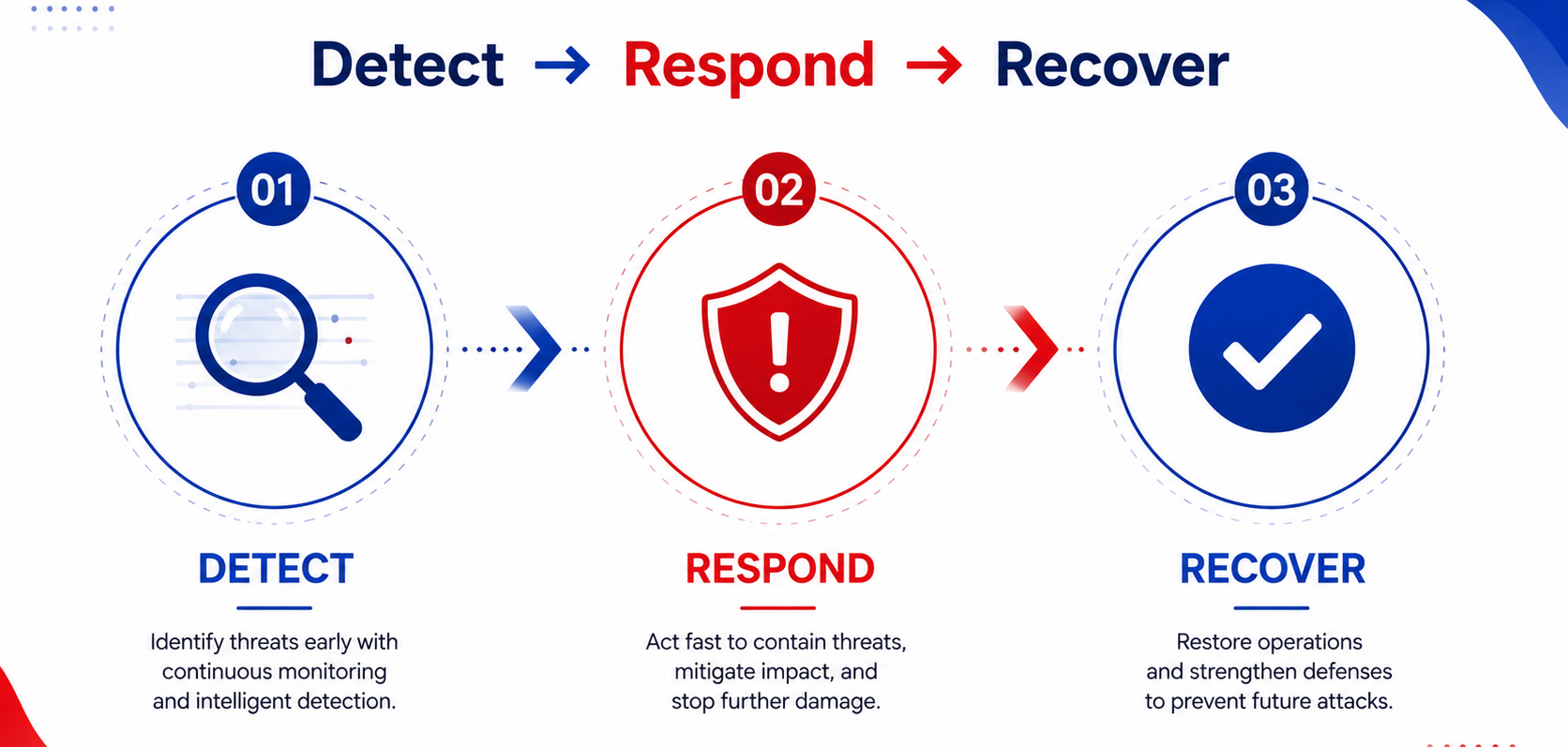
True readiness isn’t a firewall and a hope. It’s built on three pillars:
- Detection – Continuous, 24/7 monitoring that catches unusual activity before it becomes a breach, not after.
- Response – A documented, rehearsed incident response plan so your team acts in minutes, not days.
- People – Regular, practical staff training, since human error remains the single most common entry point for attackers.
How Crystal Technologies Can Help.
Crystal Technologies Limited partners with Insurance, Healthcare, and Government institutions across Kenya to build real, tested incident readiness through:
- SOC-as-a-Service – enterprise-grade 24/7 monitoring and threat detection, without the cost of building an in-house Security Operations Centre.
- Incident Response Planning – clear, tested playbooks so your team knows exactly what to do the moment something goes wrong.
- Cybersecurity Training for Teams – practical, role-specific training that turns your staff into your first line of defence.
- Security Readiness Assessments – a clear-eyed look at your current gaps, before an attacker finds them.
Ready to find out how prepared your organization really is?
👉 Request a Security Readiness Discussion with our team – support@crystaltech.co.ke
👉 Explore SOC-as-a-Service – soc@crystaltech.co.ke
👉 Book a Cybersecurity Training Session – academy@crystaltech.co.ke


 Chat with Us