

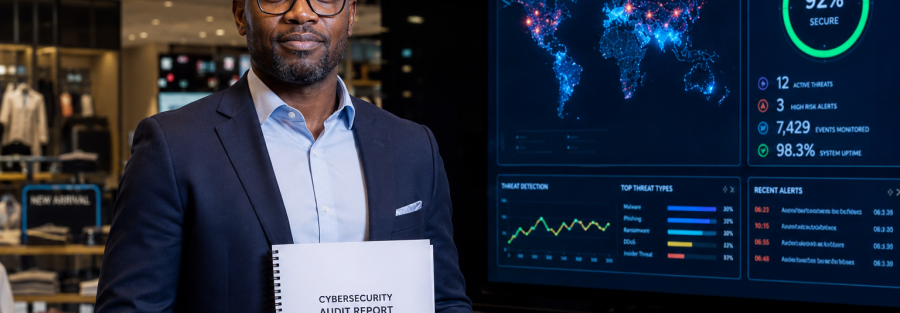
You Passed the Audit. But Is Your Customers’ Data Actually Safe?
Picture this. Your retail business has just passed a compliance audit. The certificates are framed, the reports are filed, and everyone breathes a sigh of relief.
Mission accomplished, right? Not necessarily.
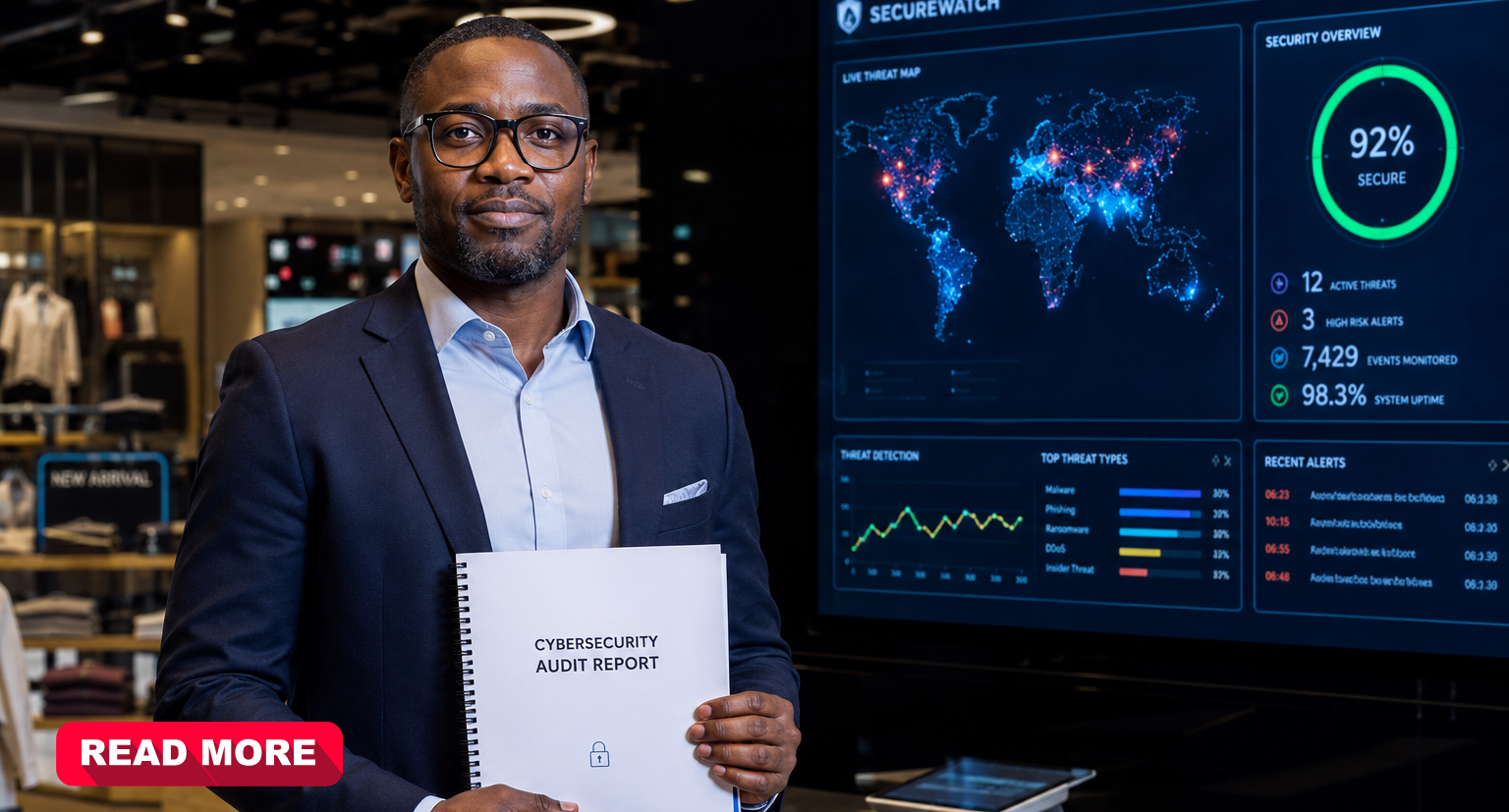
Many retail organizations make a dangerous assumption: that being compliant means being secure. In reality, compliance and security are related but they are far from the same thing.
The hard truth is that cybercriminals don’t care whether you passed an audit last month. They care whether there’s a weakness they can exploit today.
Let’s explore why compliance is only the starting point and what retail businesses need to do to truly protect customer data.
The Compliance Comfort Trap.
Compliance frameworks exist for a reason. They help businesses establish minimum standards for handling sensitive information, managing risk, and protecting customer data.
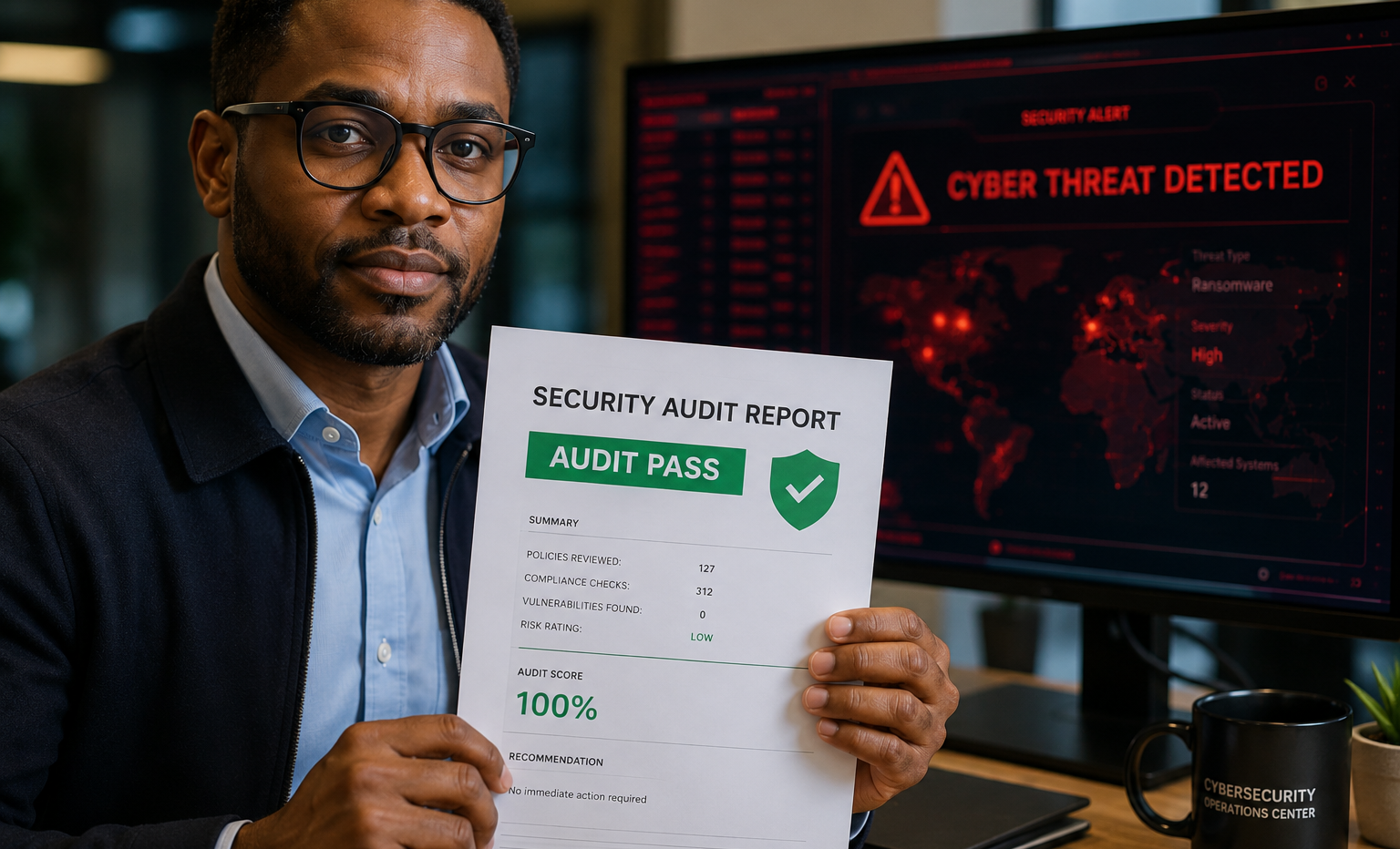
The problem? Compliance often measures whether certain controls exist not whether they are effective against today’s threats.
Think of it like a vehicle inspection. Your car may pass inspection on Monday. That doesn’t guarantee it won’t break down on Friday.
Similarly, passing an audit doesn’t guarantee your business is protected from: Phishing attacks, Ransomware, Credential theft, Insider threats, Supply chain attacks & Point-of-sale system compromises
Cyber threats evolve daily. Compliance standards update much more slowly.
Why Retailers Are Prime Targets.
Retail businesses sit on a goldmine of valuable information. Attackers are constantly looking for access to:
- Customer payment information
- Loyalty program data
- Personal customer details
- Employee records
- Supplier information
- E-commerce platforms
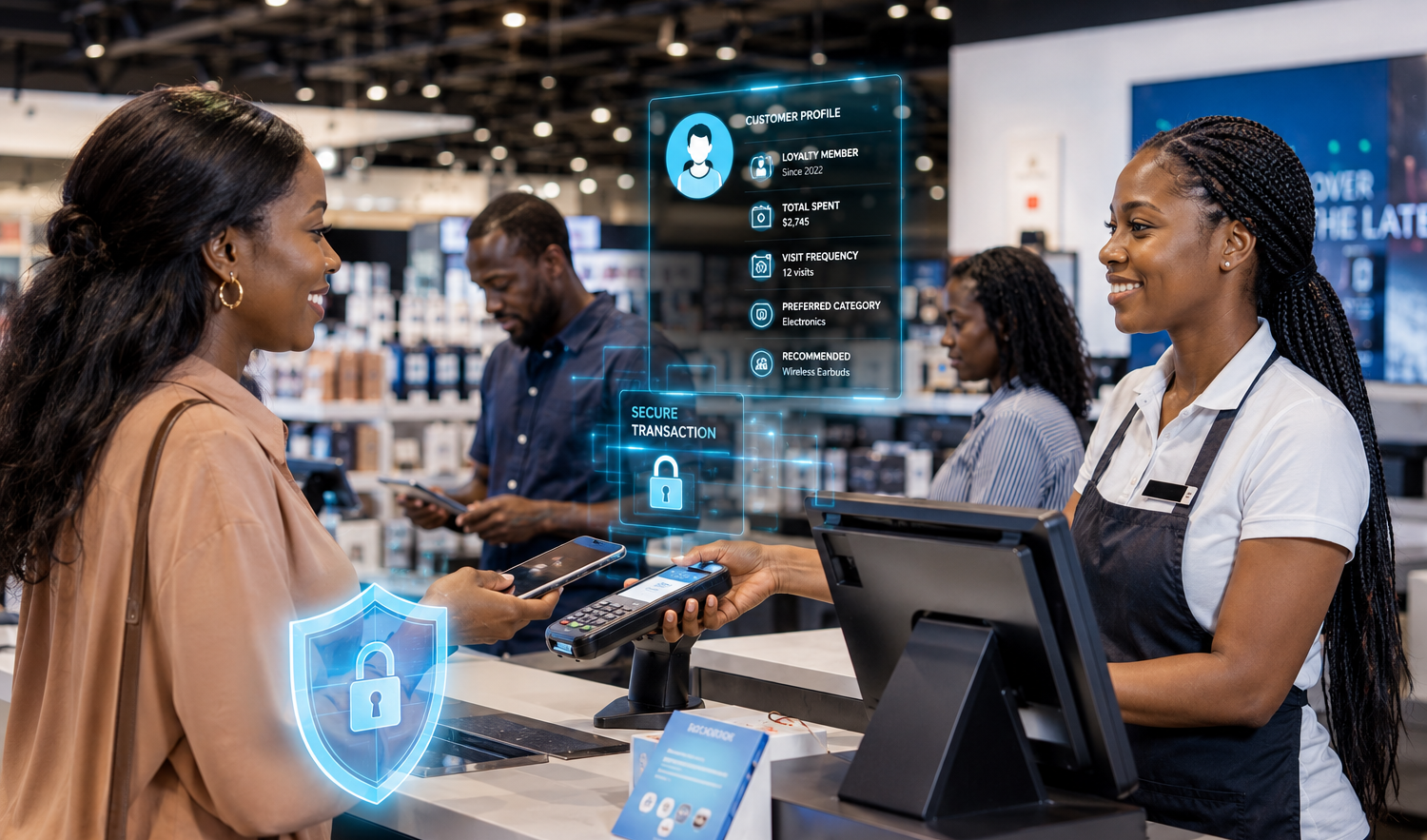
Even a small breach can result in:
- Financial losses
- Regulatory penalties
- Operational disruption
- Damaged customer trust
- Negative media attention
For customers, a data breach often feels personal. They trusted your brand with their information. When that trust is broken, recovering it can take years.
Compliance Is a Checklist. Security Is a Mindset.
One of the biggest misconceptions in cybersecurity is treating security like a one-time project.
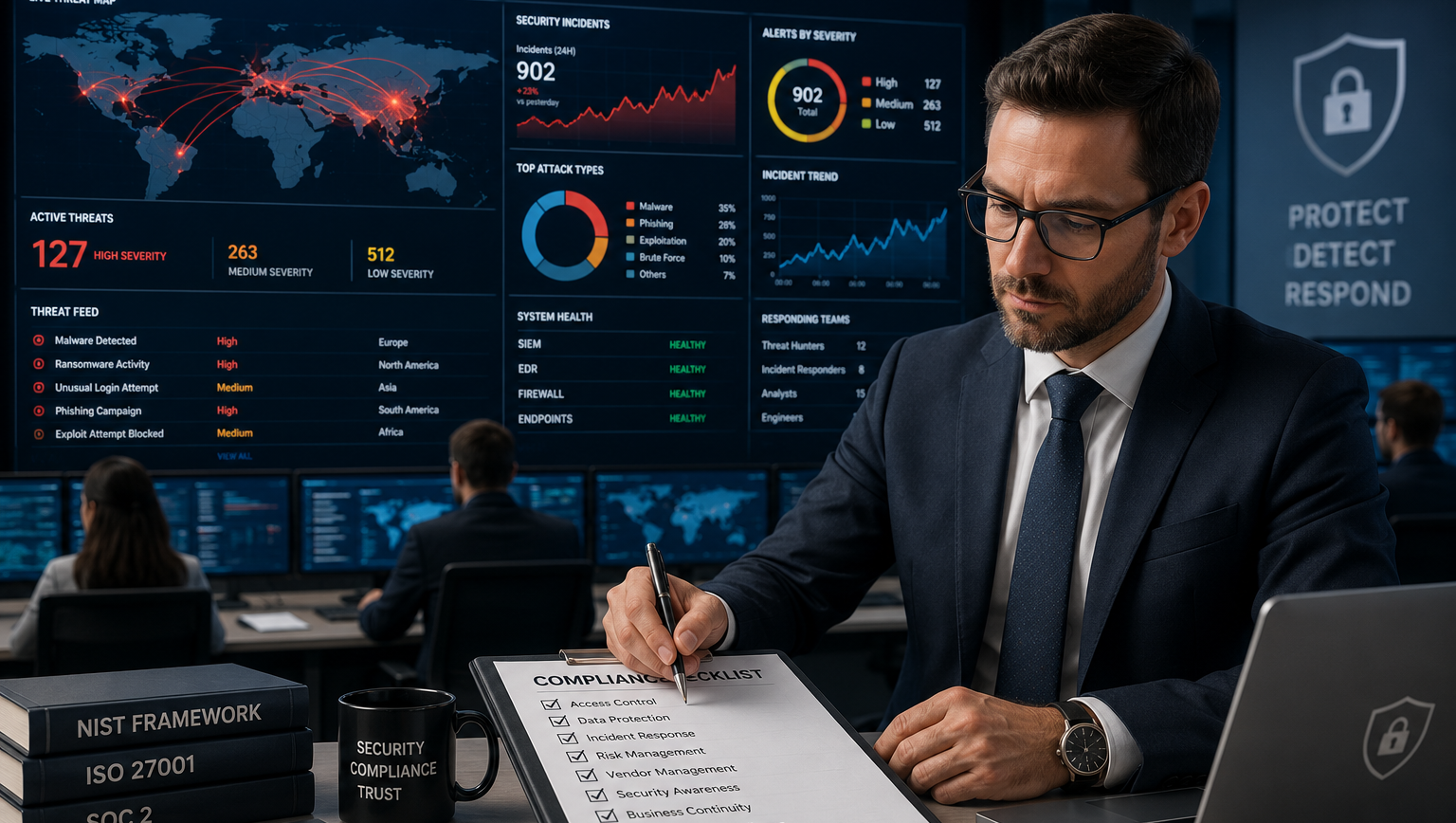
Compliance asks: “Have you implemented these controls?”
Security asks: “Are these controls working against real-world attacks?”
A compliant organization may have:
- ✅ Security policies
- ✅ Password requirements
- ✅ Access control procedures
- ✅ Documented incident response plans
But security goes further by continuously asking:
- Are employees actually following these policies?
- Can attackers bypass our controls?
- What happens if a user clicks a malicious email?
- How quickly can we detect a breach?
- Can we recover if systems are encrypted by ransomware?
Real security is continuous, adaptive, and proactive.
The Hidden Risks That Audits Often Miss.
Many successful cyberattacks occur in organizations that were technically compliant.
Why?
Because attackers target gaps between compliance requirements and operational reality.

Common examples include:
Employee Phishing Vulnerability
- Your policies may require cybersecurity awareness training.
- But would your team recognize a convincing fake supplier invoice?
- One successful phishing email can bypass years of compliance efforts.
Misconfigured Cloud Services
- Cloud storage platforms are frequently deployed correctly but later misconfigured.
- A simple setting change can expose thousands of customer records.
Third-Party Vendor Risks
- Retailers increasingly rely on:
- Payment processors
- Logistics providers
- Marketing platforms
- E-commerce plugins
- Your security is only as strong as the weakest partner in your ecosystem.
Unpatched Systems
- An audit may confirm patch management processes exist.
- But are critical systems updated quickly enough to stop newly discovered vulnerabilities?
- Attackers know exactly where to look.
What True Retail Cybersecurity Looks Like.
Security focused retailers move beyond passing audits and focus on resilience.

That means investing in:
Continuous Monitoring
- Threats don’t operate on audit schedules.
- Organizations need visibility into suspicious activity 24/7.
Employee Security Awareness
- Your people are often the first line of defense.
- Regular training helps employees identify:
- Phishing attempts
- Social engineering attacks
- Suspicious links
- Fraudulent communications
Vulnerability Assessments and Testing
- You can’t fix weaknesses you don’t know about.
- Regular assessments help uncover hidden risks before attackers do.
Incident Response Planning
- When an incident occurs, speed matters.
- Retailers should know:
- Who responds
- What systems are affected
- How customers are informed
- How operations are restored
Security Operations and Threat Detection
- Modern cyberattacks can move quickly.
- Dedicated monitoring and threat detection capabilities help identify and contain attacks before they become business crises.
The Question Every Retail Leader Should Ask.
Instead of asking: “Are we compliant?”
Ask: “How would we detect and stop an attack happening right now?”
The answer often reveals the difference between organizations that merely pass audits and those that genuinely protect customer trust.
Final Thoughts.
Compliance is important. It provides structure, accountability, and a foundation for cybersecurity practices. But compliance alone does not stop cybercriminals.

Retail businesses that thrive in today’s digital economy understand that security is an ongoing commitment not a yearly checkbox exercise.
Passing the audit is good. Protecting your customers, your reputation, and your business every day is what truly matters.
Because at the end of the day, customers don’t remember your audit score. They remember whether you kept their data safe.


 Chat with Us