
From Reactive to Resilient: A Security Transformation Story
A prominent, nationally recognized financial institution managing billions in assets and serving hundreds of thousands of customers daily faced a critical inflection point. Its cybersecurity infrastructure had not kept pace with its rapid digital growth. Legacy antivirus tools, fragmented visibility, and reactive incident management left the bank increasingly exposed to sophisticated, modern threats.
Partnering with a specialized cybersecurity solutions provider, the bank undertook a comprehensive endpoint security transformation deploying one of the world’s most advanced AI-powered cybersecurity platforms. The result was a complete paradigm shift: from blind spots and slow response times to real-time threat detection, centralized endpoint control, and measurable security resilience all without disrupting day-to-day banking operations.
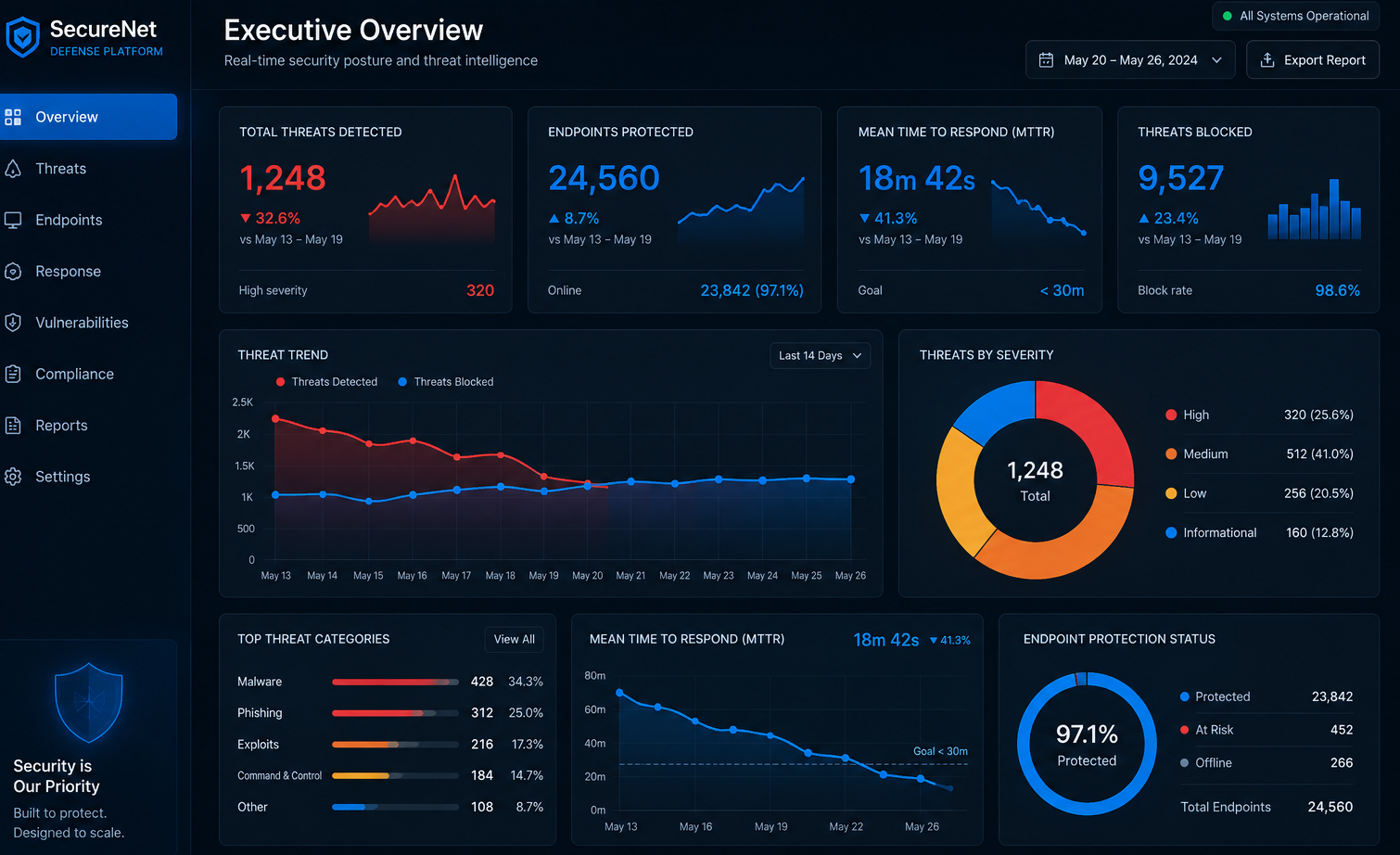
The Challenge – A Digital Bank Operating on an Analog Security Foundation
In today’s threat landscape, financial institutions are the most targeted sector globally accounting for over 23% of all cyberattacks annually. As this institution accelerated its digital transformation, expanding online banking platforms, mobile services, and branch network connectivity, its attack surface grew exponentially yet its security architecture remained dangerously outdated.
- Legacy antivirus solutions relying on signature-based detection were completely blind to fileless malware, living-off-the-land attacks, and zero-day exploits, the exact methods favored by sophisticated threat actors targeting financial institutions.
- Fragmented endpoint management across hundreds of branch offices, ATM infrastructure, back-office servers, and executive devices meant the security team had no unified, real-time view of the entire environment.
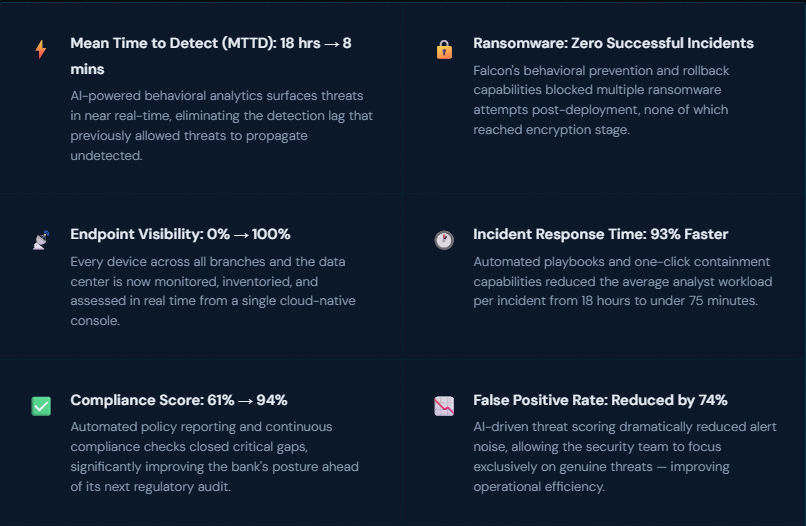
- Reactive incident response consumed enormous time and resources. Security teams spent up to 18 hours on average investigating and containing a single endpoint incident a window wide enough for catastrophic data exfiltration.
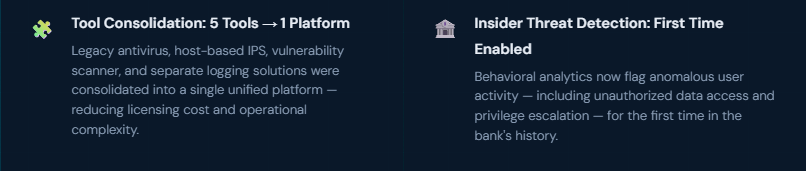
- Insider threat blind spots – without behavioral analytics, the bank could not detect anomalous user activity, privilege escalation, or unauthorized data access from within its own workforce.
- Ransomware vulnerability – the bank’s backup infrastructure and endpoint controls offered little resistance against modern ransomware-as-a-service (RaaS) operators actively targeting African financial institutions.
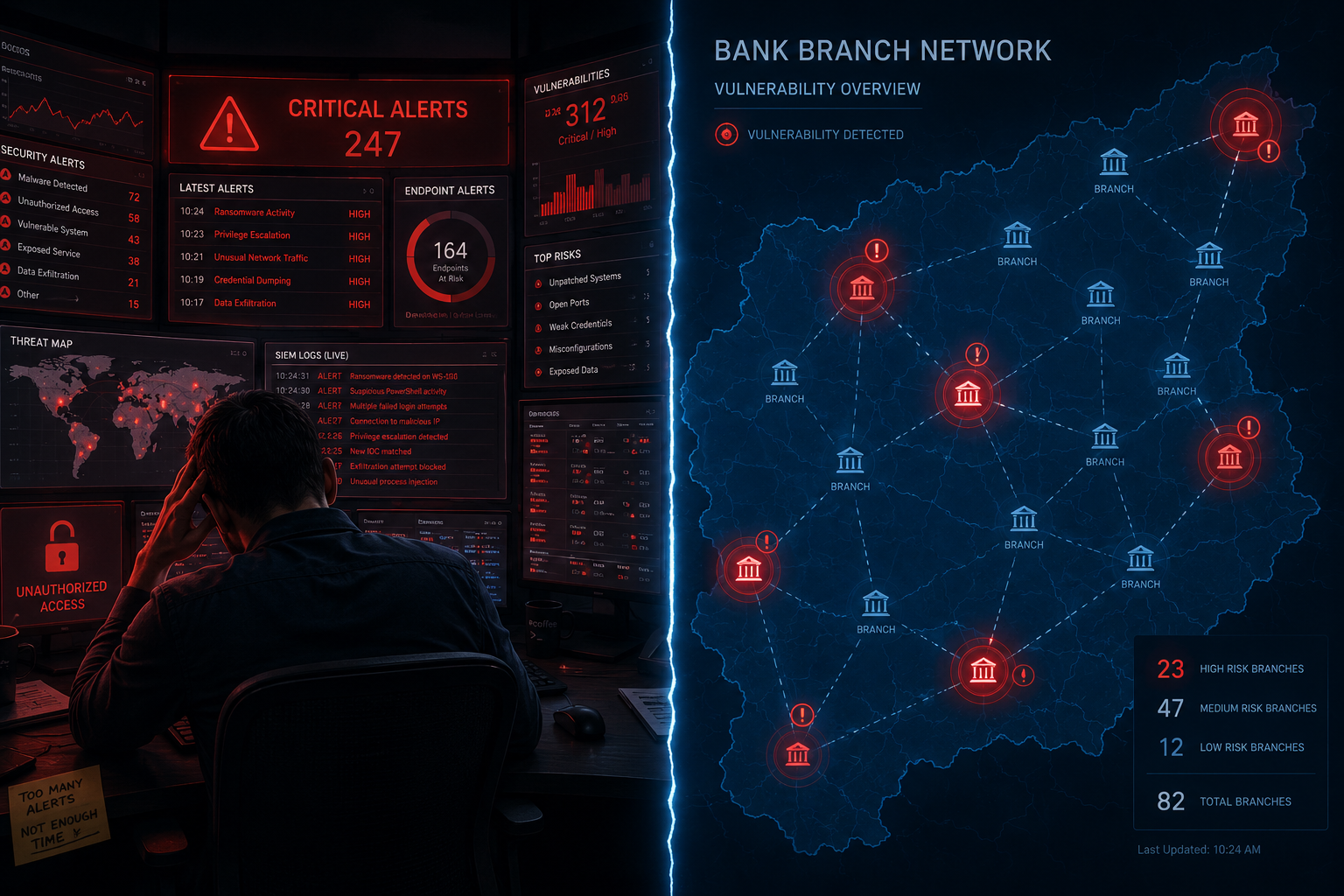
The True Cost of Security Fragmentation
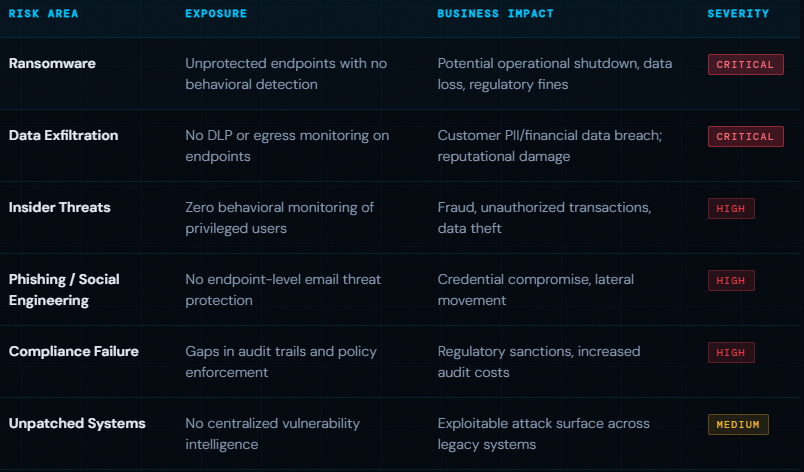
Security Risks & Business Impact Before Implementation
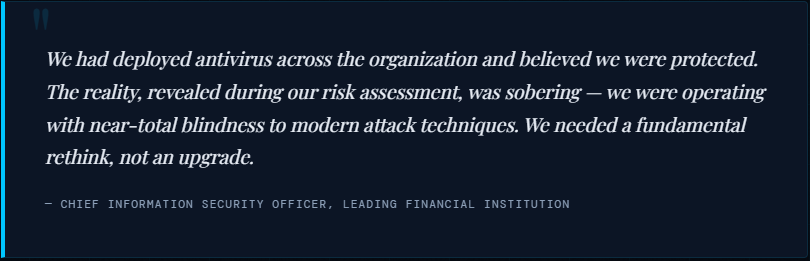
The bank’s security posture before transformation was not merely a technical concern it was a direct threat to business continuity, regulatory standing, and customer confidence. A structured risk assessment conducted at the outset of the engagement revealed alarming exposure across multiple vectors.
The Solution – Enterprise Endpoint Security: Built for the Modern Threat Landscape.
Following a thorough evaluation of enterprise endpoint security platforms, the bank deployed a best-in-class solution, integrated by a certified cybersecurity partner with deep expertise in financial sector security architecture.
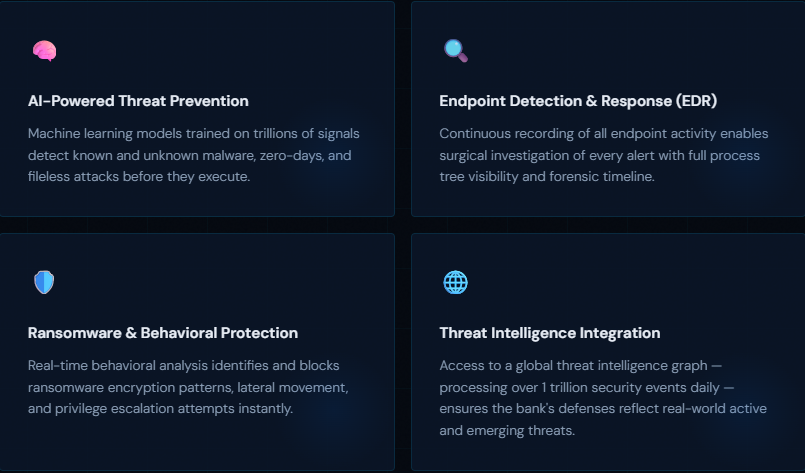
The platform delivers protection through a single, lightweight intelligent agent powered by AI and machine learning providing continuous threat monitoring, automated response, and deep forensic telemetry without impacting system performance.
Precision Execution Across a Complex Enterprise Environment.
- Deploying enterprise endpoint security across a live banking environment with hundreds of branches, thousands of endpoints, and zero tolerance for operational disruption required meticulous planning, phased execution, and deep technical expertise.
Discovery & Environment Assessment
- Comprehensive audit of the existing endpoint landscape: operating system versions, legacy software, branch connectivity, and current security tool inventory. Identification of critical assets, privileged user accounts, and high-risk systems requiring priority protection.
- Silent, lightweight Falcon sensor deployment initiated at headquarters and data center environments first. Gradual rollout to branch networks using automated deployment packages. Zero system reboots required; zero performance degradation reported by endpoint users.
Policy Configuration & SOC Integration
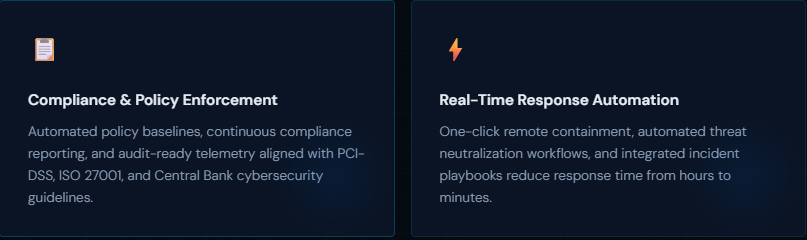
- Custom prevention policies crafted for banking-specific workflows: teller systems, core banking applications, executive devices, and ATM controllers. Integration with the bank’s existing SIEM for unified alerting. Security team training and SOC analyst enablement sessions conducted.
Go-Live, Tuning & Handover
- Full production activation with 24/7 monitoring support during hyper care period. Threat simulation exercises conducted to validate detection and response capabilities. Formal handover to internal security team with documented runbooks, escalation paths, and quarterly review cadence established.
Security Metrics That Speak Directly to the Board.
- The bank’s security team reported transformative improvements across every key metric. The results validated the strategic decision to invest in enterprise-grade endpoint security and established a strong foundation for ongoing cyber resilience.
Security as a Strategic Competitive Advantage.
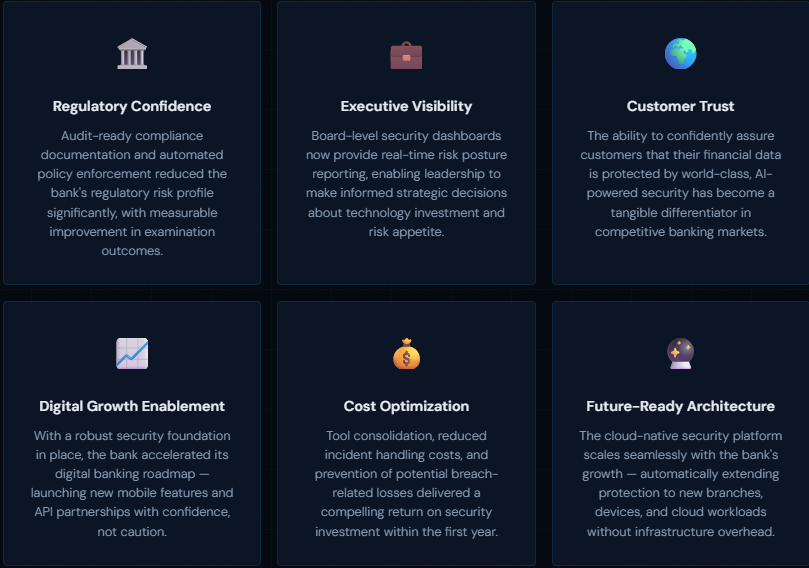
Beyond the technical metrics, the transformation delivered profound strategic value repositioning cybersecurity from a cost center to a genuine business enabler. Boards, regulators, and customers increasingly view an institution’s security posture as a proxy for operational excellence and trustworthiness.
Your Institution Deserves Enterprise-Grade Protection.
Whether you’re a bank, fintech, insurance firm, or enterprise the threat actors targeting your sector are not waiting. Let’s build your defense before a breach forces your hand.
Request a Security Assessment: support@crystaltech.co.ke Cybersecurity Training & Academy: academy@crystaltech.co.ke
 Chat with Us